
Osaka Nara Kyoto & Tottori
Words often fall short in capturing Japan’s true essence because the country’s beauty and spirit are deeply intertwined with fleeting moments, subtle emotions, and cultural concepts that transcend literal translation.
My journey through Japan began in the Kansai region, where tradition and modern life beautifully intertwine. From the electric streets of Osaka to the peaceful shrines of Kyoto, the friendly deer of Nara to the surreal sand dunes of Tottori — each stop offered a new emotion, a new story, and a little piece of my heart.
I had been waiting a long time for this beautiful, lasting memory to be engraved not just in my mind, but in my heart forever. It may seem like a 13-day-long trip to some, but for me, even 30 days would feel too short in such a serene country. Visiting Japan was not just a momentary escape for me, nor merely a vacation, but a journey that changed my perspective on life.
I felt a true sense of belonging. The respect shown not just to people, but also to nature, animals, and everything else—the cleanliness, the politeness, and the discipline in following rules, whether it’s driving or keeping the country clean—reflect how everyone puts their city before themselves. Not to mention the slightly confusing yet fancy and clean toilets found in almost all public places.
Every time I spoke to the locals in Japanese, their faces lit up with awe, and they truly appreciated my effort to learn their language. Their acknowledgment genuinely uplifted my spirits, as Japan and the Japanese language had fascinated me ever since my teenage years, when I started watching anime and reading manga, which inspired me to pursue learning the language.
I visited Japan in the month of May, a wonderfully pleasant time to explore the country.
My journey began in Osaka, a city full of warmth and life. Known for their outgoing and humorous nature, Osakans are often seen as more approachable and spirited compared to people from other regions of Japan. Don’t be surprised if a local strike up a friendly conversation—it’s part of the charm! It has Japan’s second-largest metropolitan economy after Tokyo and a long history of commerce and trade.
Dotonbori- The Heartbeat of Osaka’s Nightlife
With its neon-lit streets, giant crab signs and riverside dining, offers some of the best nightlife experiences in Japan. And of course, no visit is complete without a selfie in front of the iconic Glico Man!
By day or night, Dotonbori is alive with energy. The area is packed with:
- Street food stalls and local eateries
- Bright, animated billboards
- The scent of sizzling Takoyaki in the air
- The echo of laughter, music, and conversations
Walking through Dotonbori is like stepping into a live-action movie—loud, colorful, and irresistibly fun.
Dotonbori is world-famous for its Osaka-style comfort food, including:
- Takoyaki – Octopus-filled batter balls, crispy on the outside and gooey inside
- Okonomiyaki – A savory pancake grilled with meat, seafood, and veggies
- Kushikatsu – Deep-fried skewers dipped in a rich sauce
- Ramen & Sushi – Countless hole-in-the-wall shops serve unforgettable bowls
Don’t miss the restaurants with giant 3D signs—a crab with moving claws, a pufferfish, or a gyoza that towers over you. They’re landmarks in their own right!
Let’s not forget the shopping—Osaka is a paradise where choices seem endless! Whether you’re a beauty enthusiast, a fashion lover, or a curious traveler, the city spoils you with an incredible variety of options. Start with Don Quijote (Donki), a multi-level wonderland that stays open 24/7. From luxury skincare and quirky snacks to cosplay gear and souvenirs, it’s a treasure trove of surprises. For top-rated Japanese beauty products at great prices, head to trusted drugstores like Matsumoto Kiyoshi and Sundrug.
If fashion is your thing, explore Osaka’s trendy boutiques, vintage and thrift stores, and well-known brands like WEGO, GU, Uniqlo, and ABC-MART, where style meets affordability. And for anime lovers? There’s no shortage of figures, gachapon (capsule toys), and collectible cards that bring out the inner child in everyone. Whether you’re hunting for skincare, snacks, or souvenirs, you’ll walk away with more than just bags—you’ll carry a bit of Osaka’s playful spirit home with you.




Nara Deer Park – Where Nature Meets Myth
Located at the foot of Mount Wakakusa, Nara Park is home to around 1,300 freely roaming Sika deer. These aren’t just ordinary animals—they’re considered messengers of the gods in Shinto belief, and they’ve lived here in harmony with humans for centuries. Nara Deer Park is more than a tourist spot—it’s a place where nature, history, and spirituality intertwine. It’s peaceful, photogenic, and leaves a lasting impression, especially when a deer bows to say thank you.
Feeding the Deer: A Unique Ritual
You can buy shika senbei (deer crackers) for around ¥200 from official vendors in the park. The deer have learned to bow politely in exchange for treats—a delightful moment!
Note: Although they’re friendly, the deer can get excited or pushy when they know you have food. Always feed them with caution, especially around children.

Tōdai-ji Temple – Home of the Great Buddha
No visit to Nara is complete without stepping into the majestic grounds of Tōdai-ji Temple (東大寺), a UNESCO World Heritage Site and one of Japan’s most historically significant temples.
The moment I entered the temple; I saw the temple guardians standing on both sides of the entrance. The Mighty Nio Statues at the Great South Gate an architectural marvel in its own right. Standing inside this gate are two fierce, muscular figures that stop nearly every visitor in their tracks: the Nio Guardians. These warrior-like statues serve as spiritual bouncers, meant to ward off evil spirits and keep the sacred grounds safe.
They come in a pair and are typically placed at the main entrance of major temples across Japan:
- Agyō (阿形) – With an open mouth, symbolizing the sound “A,” the first letter of the Sanskrit alphabet, representing birth, beginnings, and strength.
- Ungyō (吽形) – With a closed mouth, symbolizing the sound “Un” (or “Hum”), representing death, endings, and wisdom.
Tōdai-ji, meaning “Great Eastern Temple,” was founded in 752 AD during the Nara Period by Emperor Shōmu remains a powerful symbol of spiritual and architectural ambition.
At the center of the majestic Tōdai-ji Temple sits a figure of immense spiritual and physical magnitude — the Great Buddha of Nara, also known as the Daibutsu (大仏). Towering at 15 meters tall, this ancient bronze statue is more than just a sculpture; it’s a symbol of national unity, peace, and enlightenment. Built as a divine offering to bring protection and harmony to the nation through the spread of Buddhism. Took over 250 tons of bronze, 7 years to complete, and required contributions from nearly every province in Japan, making it a true national project. He is often seen as the Buddha that transcends time and space, symbolizing infinite wisdom and the interconnectedness of all things.
The mudra (hand gesture) of the right hand is the fear-not gesture (Abhaya Mudra), symbolizing protection and reassurance.
The left-hand rests open on the knee, symbolizing welcoming and compassion. The original statue was damaged by earthquakes, fires, and wars over centuries. Despite its turbulent history, it remains one of Japan’s most enduring icons of peace.
Its main hall, the Great Buddha Hall (Daibutsuden), was once the largest wooden structure in the world—and even today’s rebuilt version (from 1709) is among the largest.
The Temple Grounds
The temple is part of a larger complex that includes:
- Nandaimon (Great South Gate) – Flanked by two fierce guardian statues (Niō), carved over 800 years ago
- Nigatsudō Hall – Offers one of the best panoramic views of Nara
- Hokkedō Hall – A quieter hall housing more sacred images
- Tōdai-ji Museum – Displays treasures and artifacts from the temple’s long history
Fun Fact
One of the pillars inside the Great Buddha Hall has a hole at its base said to be the same size as the Buddha’s nostril. It’s believed that squeezing through it brings good fortune and enlightenment—though it’s a tight fit for adults!
As I walked around the Great Buddha inside the temple, a profound sense of peace washed over me. My heart felt light, as if all worries had momentarily dissolved. I stood there, completely awestruck by the sheer size and presence of the statue—it radiated a calm, positive energy that seemed to reach deep within me.
Tōdai-ji isn’t just a temple—it’s a journey through Japan’s spiritual, political, and artistic heritage. Whether you’re drawn by its sheer size, the peaceful deer nearby, or the sacred energy within its halls, it’s a place that stays with you long after you leave.

I ended my day on an exciting note, though I was still battling a bit of jet lag. My eyes were heavy with sleep, yet I couldn’t bring myself to close them—the night view from my hotel room was simply too beautiful to ignore. The glittering city lights stretched out before me, shimmering like a sea of stars, while the quiet hush of the night added a peaceful contrast. In that stillness, I found a different kind of magic—one that made me linger a little longer, just to admire the beauty of Osaka after dark.
The next day, my itinerary was packed with sights that demanded a fair bit of walking—so staying energized was key! After enjoying a scrumptious breakfast at the hotel, which not just fuelled my body but also lifted my spirit. With my backpack ready, camera in hand, and a sense of excitement bubbling within me, I stepped out prepared for a power-packed day filled with adventure, discovery, and unforgettable moments.
Arashiyama Bamboo Grove – A Walk-Through Tranquility
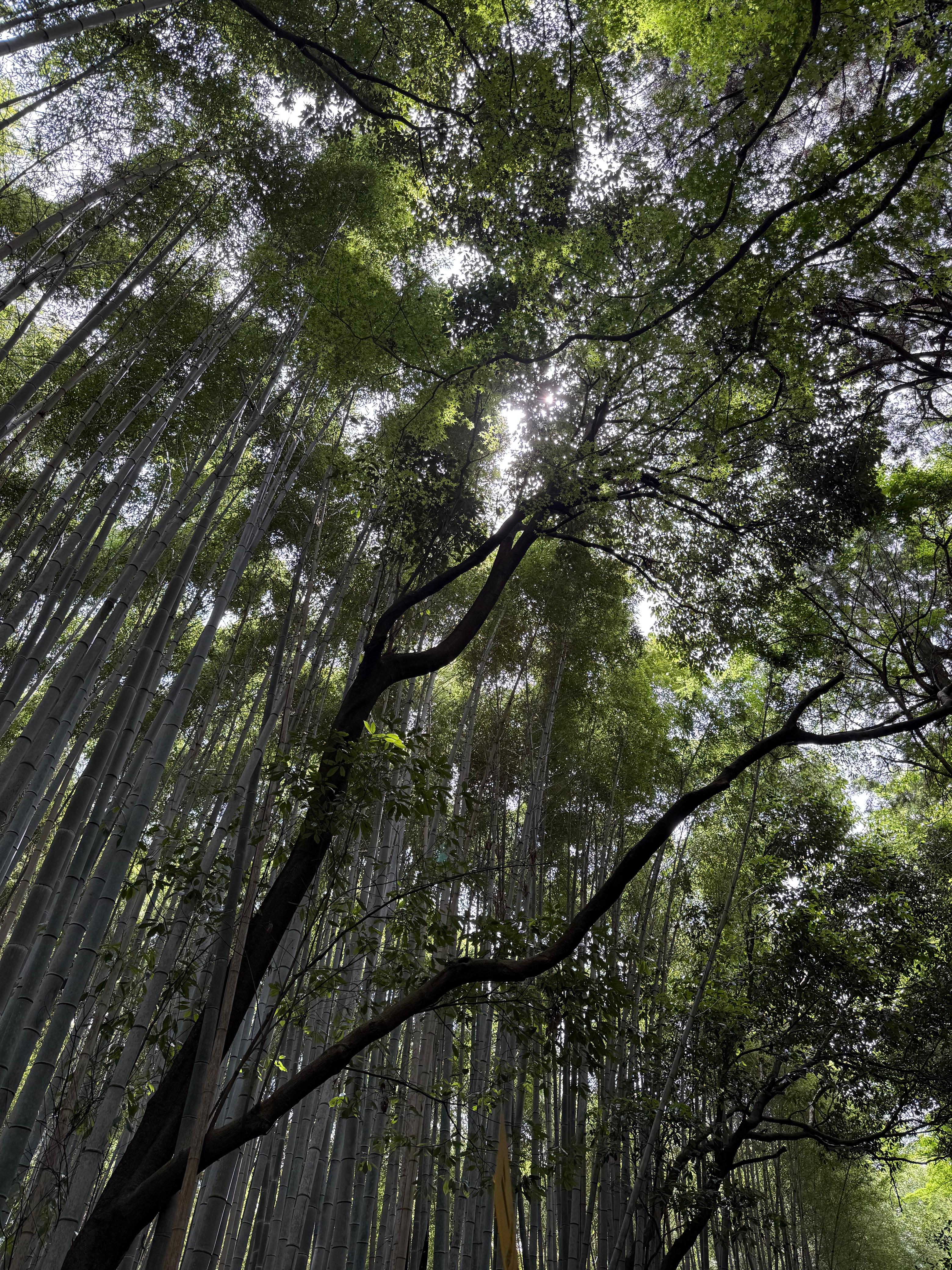
Tucked away in the scenic outskirts of Kyoto, the Arashiyama Bamboo Grove isn’t just a sight—it’s an experience that touches the soul. As I stepped into this lush green forest it felt like entering another world, one where time slows down and nature whispers softly through towering green stalks. The wind came rushing toward me, not with force, but with a gentle embrace—as if nature itself was offering comfort. I felt an unexpected calm settle over me. The noise of the world faded, replaced by the rhythm of nature and the steady beating of my own heart. There was no rush, no need, no thought—just presence. A deep, soothing tranquility filled me, as if the universe had pressed pause, giving me this one perfect breath in time.
The grove is located in Arashiyama, a beautiful district in western Kyoto known for its riverside charm, mountains, and temples. The bamboo path, lined with soaring stalks that reach up to 30 meters (100 feet), stretches about 500 meters, but its impact is far greater. As sunlight filters through the canopy above, creating shifting patterns of light and shadow, you’re surrounded by a calming hush—broken only by the rustle of bamboo swaying gently in the wind. It’s no wonder this grove is considered one of the “100 Soundscapes of Japan.”
The Arashiyama Bamboo Grove is more than a photo spot—it’s a moment of stillness and wonder. The combination of earthy scents, filtered sunlight, and rhythmic swaying feels deeply grounding—perfect for travelers’ seeking both visual beauty and inner calm. There is a spiritual sense of clarity here, as if the forest naturally encourages you to let go of cluttered thoughts and simply be present.

Kinkaku-ji – The Golden Pavilion of Kyoto
Shimmering like a jewel against a mirror-like pond, Kinkaku-ji, or the Golden Pavilion, is one of Kyoto’s most iconic and mesmerizing sights. Draped in gold leaf and surrounded by lush gardens, this Zen Buddhist temple is not only a visual masterpiece, but also a symbol of harmony, impermanence, and tranquillity.
Originally built in 1397 as a retirement villa for shogun Ashikaga Yoshimitsu, the pavilion was converted into a Zen temple after his death. What you see today is a reconstruction from 1955, after the original was tragically destroyed by arson in 1950—but its legacy and splendor remain untouched.
Kinkaku-ji isn’t just stunning because it’s covered in gold—it’s also a masterpiece of layered design, with each of its three floors reflecting a different style of Japanese architecture, purpose, and spiritual philosophy.
First Floor – The Chamber of Dharma Waters (法水院 / Hōsui-in)
Style: Shinden-zukuri (Heian-period palace architecture)
Material: Natural wood with white plaster walls
The first floor, grounded and open, reflects aristocratic elegance from the 11th-century Heian period. It was designed for welcoming guests and includes verandas, sliding doors, and latticed windows. The interior once housed statues of the historical Buddha (Shakyamuni) and Ashikaga Yoshimitsu, though it’s not open to the public today.
Fun fact: This level is not gilded, symbolizing humility and the foundation of enlightenment.
Second Floor – The Tower of Sound Waves (潮音洞 / Chōon-dō)
Style: Buke-zukuri (samurai residence style)
Material: Fully covered in gold leaf on the exterior
This level reflects the warrior class aesthetic. It includes bays, balconies, and latticed windows, traditionally used in the homes of samurai. Inside, it enshrines a statue of Kannon Bodhisattva, surrounded by 33 representations—again, not visible to the public.
Symbolism: This golden floor bridges the earthly and spiritual realms, representing personal discipline and inner growth.
Third Floor – The Cupola of the Ultimate (究竟頂 / Kukkyō-chō)
Style: Zenshū-butsuden-zukuri (Zen temple hall architecture)
Material: Fully gilded, inside and out, with a Chinese-style pyramidal roof
The top floor embodies pure Zen spirit and Buddhist transcendence. With its openwork windows and simple, elevated design, it symbolizes the highest level of detachment from worldly desires. This floor is reserved for meditation and spiritual contemplation.
At the very top, a phoenix ornament (fenghuang) perches—a mythical bird that symbolizes rebirth, immortality, and peace.
From grounded elegance to spiritual transcendence, each floor of Kinkaku-ji tells a story—not just of architecture, but of the human journey toward enlightenment. The layered design encourages visitors to reflect on their own path, starting from the earthly and rising toward the sacred. Walking along the garden path, with perfectly pruned trees and quiet stone arrangements, you may feel a subtle shift within—an invitation to slow down, breathe deeper, and simply observe.
The temple embodies the Zen principle of wabi-sabi—the beauty of imperfection, impermanence, and simplicity. It’s a place to reflect, not just admire.


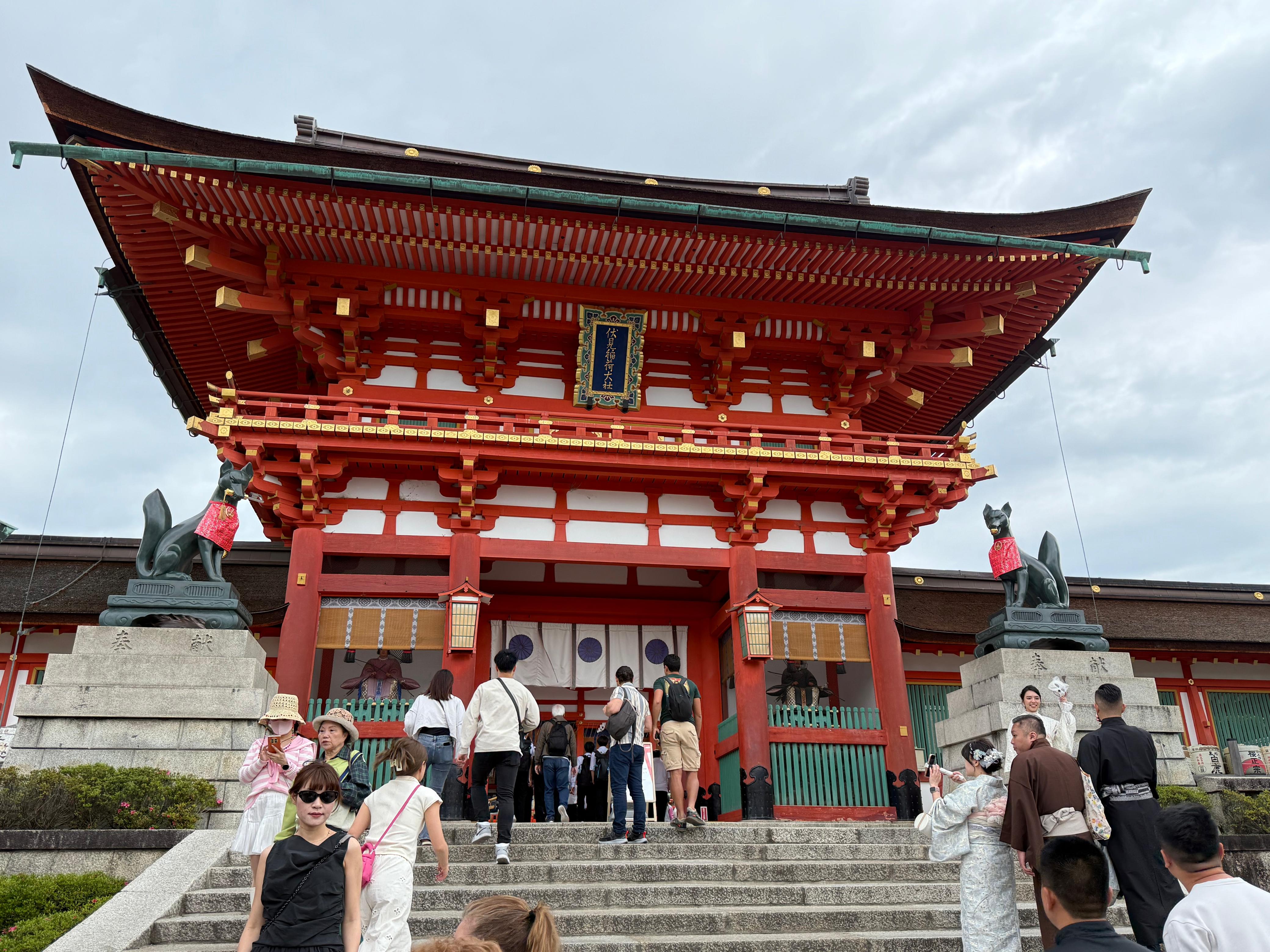
Fushimi Inari Taisha (is literally a “great shrine”) – The Path of a Thousand Torii
Famous for its endless rows of vermillion torii gates, this Shinto shrine is dedicated to Inari Ōkami, the deity of rice, prosperity, and good fortune.
Walking through its gates is like stepping into a sacred rhythm, where each step invites introspection and quiet awe. Despite being famously called the “Path of a Thousand Torii”, the shrine is actually lined with over 10,000 vermillion gates, each donated with prayers for prosperity and success, each bears the name of its donor engraved in black kanji.
As you ascend through these vibrant red corridors, light filters in between the gates, casting an ever-changing play of shadows—a surreal and meditative experience that feels like walking through a prayer. In Shinto tradition, torii gates mark the entrance to a sacred space—a threshold between the mundane world and the divine. Each time you pass through a torii, it’s like stepping into a more purified state, leaving behind everyday worries and entering a place of spiritual clarity. Every step forward through the tunnel of torii is like shedding a layer of doubt, fear, or negativity.
Every gate is a prayer, a passage, a whisper from the divine. By the time you reach the summit—or even partway up—you often feel lighter, quieter, and clearer inside.
This ritual walk isn’t just physical. It becomes a pilgrimage for the soul—a moving meditation through beauty, history, and sacred silence. Travel isn’t just about places; it’s about who you become while moving through them.
The Fox Isn’t Just Cute – It’s Sacred
Inari’s messenger, the fox (kitsune), is often shown holding a key in its mouth—believed to unlock rice granaries and symbolize wealth and good harvest. In Japanese folklore, foxes are considered the messengers of Inari and are believed to ward off evil spirits and deliver wishes.
The Shrine Is Over 1,300 Years Old
Founded in 711 AD, Fushimi Inari is one of the oldest Shinto shrines in Japan, even older than Kyoto itself as Japan’s capital.
Spirits of the Forest
The mountain trail is lined with miniature shrines and spirit stones (yorishiro). Some locals believe these spots are inhabited by kami (Shinto spirits), and many visitors feel a strong spiritual presence here.
You’ve Seen It in Movies
The iconic red torii path made a stunning appearance in the film “Memoirs of a Geisha” (2005)—sparking a surge in international tourism.
Write Your Wish to the Fox
Instead of the usual wooden plaque, here you write your wish on a fox-shaped ema (prayer board). Many draw faces on them—some cute, some fierce—adding a personal creative touch to their prayers.

Osaka Castle – The Pride of a Warrior City
A symbol of resilience, grandeur, and feudal ambition
Towering above the city skyline amidst serene moats and gardens, Osaka Castle (Ōsakajō) is one of Japan’s most iconic landmarks. Rich in history and surrounded by cherry blossoms, it stands as a proud monument to the legacy of Toyotomi Hideyoshi, the warlord who sought to unify Japan in the 16th century.
Originally built in 1583 by Toyotomi Hideyoshi, the castle was intended to be the strongest fortress in Japan. The castle was destroyed and rebuilt multiple times due to wars and lightning strikes — what stands today is a 1931 concrete reconstruction with modern amenities, though visually true to its historic design. Inside, the castle houses a museum detailing samurai culture, the Toyotomi clan, and the castle’s turbulent past.
The castle is surrounded by Osaka Castle Park, a vast green space perfect for strolling, jogging, or hanami (cherry blossom viewing). Nishinomaru Garden offers paid access to beautifully landscaped grounds with over 600 cherry trees — spectacular in spring. From the main tower’s observation deck, enjoy panoramic views of Osaka’s skyline.
Highlights Inside the Castle
- Multi-floor museum with interactive samurai exhibits
- Original armour, weapons, and screens
- Digital storytelling on the Siege of Osaka
- Rooftop golden shachihoko (mythical tiger-fish ornaments) and crane motifs
The evening view of Osaka Castle was truly breathtaking. Bathed in the soft glow of twilight, the castle stood majestically against the dusky sky, its golden accents shimmering gently. The entire area felt like a breath of fresh air—calm, peaceful, and deeply refreshing. Surrounded by serene gardens and quiet pathways, it was the perfect setting to slow down, reflect, and simply take in the beauty of the moment.


And just like that, I brought my day to a close. While my mind felt refreshed and full of beautiful memories, my legs were undeniably tired from all the walking. But I knew exactly how to unwind—a soothing soak in the bathtub followed by a warm cup of refreshing matcha tea. Just the right combination to relax, recharge, and prepare me for yet another action-packed day ahead!
With each new day, my excitement only seemed to soar. Every morning greeted me with a sense of wonder—bringing a smile to my face, peace to my mind, and happiness to my heart. On the third day of my journey, I set off to explore Tottori, a destination that promised unique charm and quiet beauty.
While technically not a true desert, the Tottori Sand Dunes are often called “Japan’s desert” and are the largest dune system in the country. They were formed over thousands of years from sediment carried by the Sendai River. Tucked away on Japan’s western coast, Tottori is often overlooked—but perhaps that’s what makes it so magical. A prefecture of sand dunes, quiet shrines, fresh seafood, and slow living, Tottori is where time slows down, and nature becomes a mirror to the soul. Tottori is famous for its juicy, oversized nashi (Asian pears)—a symbol of the region’s simplicity and richness. Tottori’s Misasa Onsen is famous for having radium-rich waters, said to help with healing and longevity. One of the baths is built right along the river, offering a tranquil, open-air soak surrounded by nature.
Tottori is Japan’s least populated prefecture, making it a peaceful escape from crowded tourist hubs. It’s ideal for travelers seeking quiet, undisturbed beauty and meaningful solitude.
The Sand Museum – Art that Time Will Reclaim
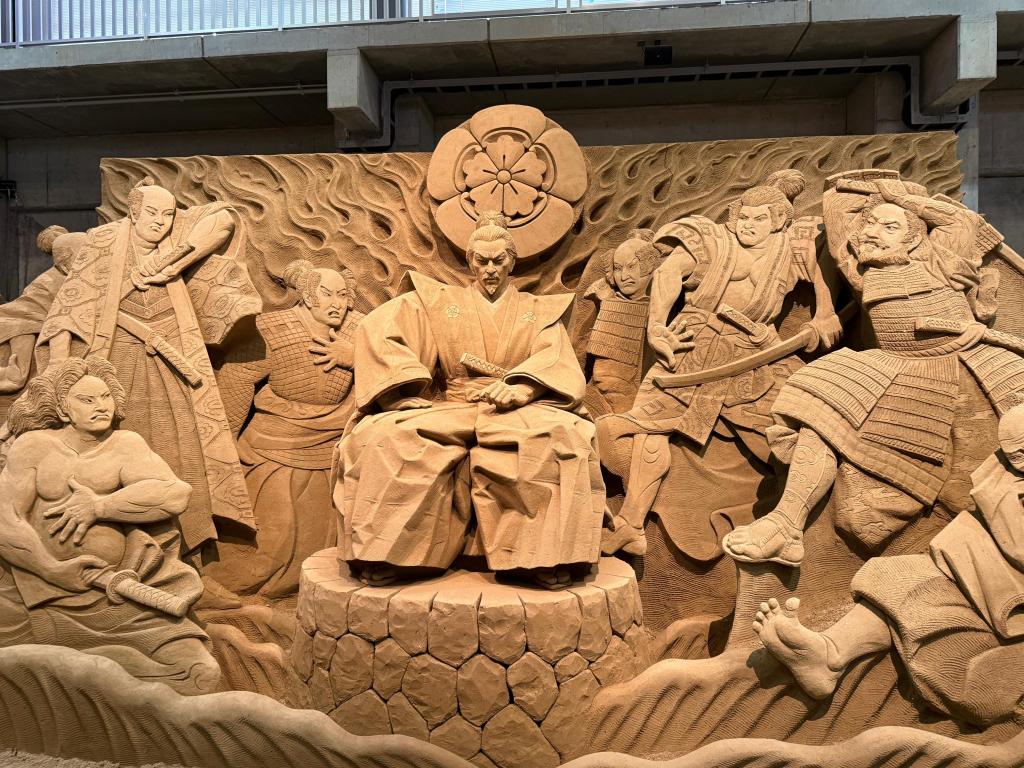
At the edge of Tottori’s windswept dunes lies a place that seems almost impossible: a museum where every exhibit is made entirely from sand. But not just any sand—these are massive, intricate, masterpieces carved with stunning detail, and they’re meant to vanish. Each year, the museum unveils a brand-new exhibition based on a specific theme—such as:
- Ancient Egypt
- Nordic Legends
- America’s Wild West
- Southeast Asia’s temples
World-renowned sand sculptors from across the globe are invited to Tottori to design and shape monumental works that can span entire rooms. These pieces are ephemeral—displayed for less than a year before being returned to dust, embracing the Japanese aesthetic of wabi-sabi: beauty in impermanence.
This year’s theme was “Japan”
- This is the museum’s first exhibition dedicated to Japan, marking its 16th annual theme since opening.
- The exhibition is titled “Travel Around the World in Sand: Japan” or “Journey Through Japan in Sand“
- It featured 19 elaborate sand sculptures depicting Japanese history, culture, mythology, the warring states era, postwar recovery, and iconic landmarks such as Mt. Fuji, Himeji Castle, and a replica of the Great Buddha in Nara.
- Highlights include a dramatic sculpture of the deity Susanoo no Mikoto battling the eight-headed serpent Yamata no Orochi, as well as scenes of citizens rebuilding after World War II, with the Atomic Dome as a backdrop.
- The exhibition was created by 20 artists from 12 countries using approximately 3,000 tons of sand.
Words can hardly capture the intricacies, beauty, and sheer dedication that went into creating these incredible marvels. As I stood there, gazing at each sculpture, I was left completely awestruck and mesmerized. Each one had lifelike expressions and emotions, as if it were truly alive—the details were exemplary. The level of detail was nothing short of extraordinary. It’s the kind of beauty that photographs can’t do justice— one really needs to be there to truly appreciate their beauty!

Sand Sledging at the Tottori Sand Dunes – Japan’s Desert Thrill
This fun-filled ride isn’t just for kids; it’s also for adults who wish to relive their childhood—a momentary chance to be a kid again, not just in age, but in energy as well, this experience is as nostalgic as it is thrilling, with the ocean breeze only adding to the magic.
Located near the Sea of Japan this sand sledging in Tottori isn’t just a fun activity—it’s a rare chance to experience a desert-like adventure in Japan. It’s unexpected, exhilarating and a great way to break up a peaceful temple and nature itinerary with some energy and laughter.
What You’ll Experience
- A short lesson on technique and safety
- Climb up a dune (great workout and quite exhilarating!)
- Glide or sled down slopes up to 30 meters high
- Views of the Sea of Japan make it an unforgettable memory.

If Tokyo is the pulse of modern Japan, Tottori is its heartbeat in stillness. It invites you to step off the usual path, walk a little slower, and remember that the most powerful journeys often begin in silence.
I ended my day soaking in the beauty of Tottori and the joy of a fun-filled ride. What I longed for most afterward was a warm, relaxing bath—to soothe my tired feet and recharge for the adventures that still awaited me on this exciting journey.

 SoulMapStories.com